
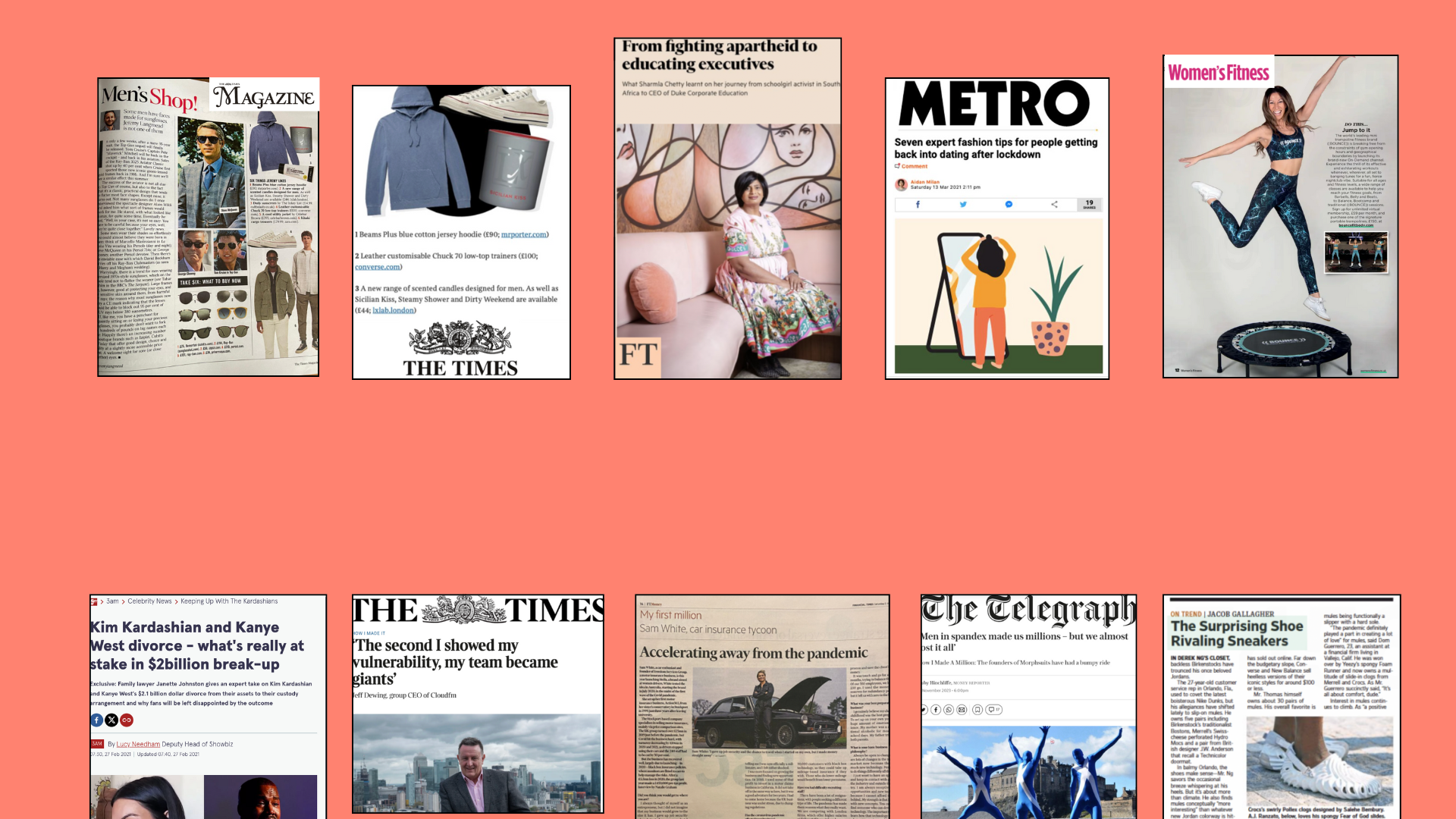
If I had a pound for every time someone asked me, “So, what exactly is PR?” … I’d probably be retired on a beach somewhere. Often, PR (public relations) is confused with marketing or advertising, but it has a unique role. Keep reading for a breakdown of everything PR and discover the answers to some of the most frequently asked questions.
What is PR?
PR is short for public relations, and it’s all about how your brand is perceived by the outside world. Think of it as your reputation engine – it’s about building trust, credibility, and relationships with your audience, rather than a competition of who can shout the loudest with flashy ads.
Whereas marketing is more about promoting and selling, PR is about shaping the story people tell about you when you’re not in the room.
Advertorial vs Editorial – What’s the Difference?
There’s often confusion between advertorial and editorial pieces. Here are the key differences:
- Advertorials are paid-for articles that look like regular news articles but are written to advertise a specific brand, product, or service.
- Editorials (what PR helps you get) are written by journalists or media outlets because your story is genuinely newsworthy.
One you pay for, one you earn.
Paid, Owned & Earned Media – Where Does PR Fit?
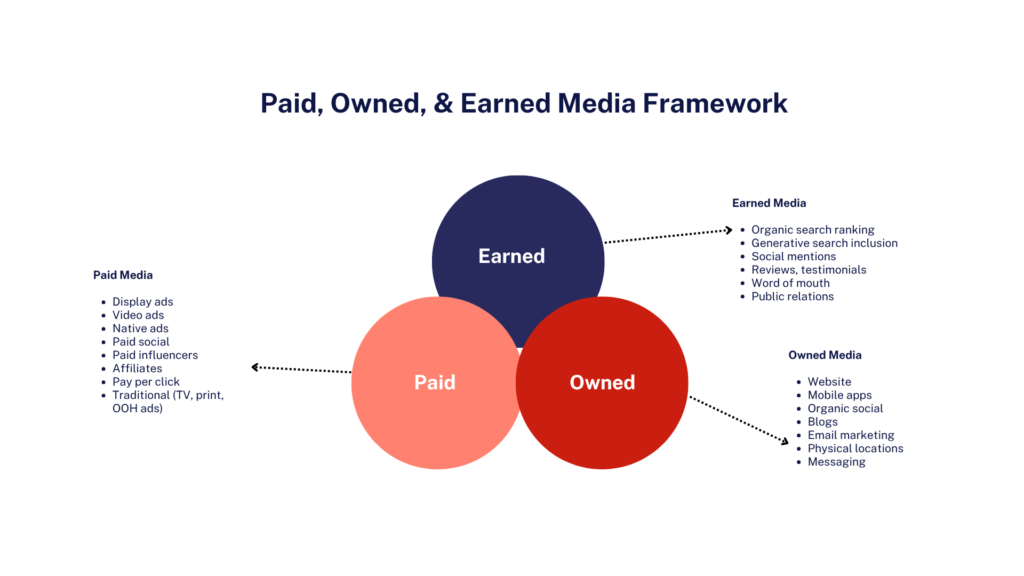
Marketing today often falls under three buckets:
Paid media – this is anything you pay for to promote your brand. Think ads (online or offline), paid influencers, sponsored posts, or pay-per-click campaigns. This often comes across as more ‘salesy.’
Owned media – the channels you control. This includes your website, blog, social media accounts, email newsletters, and even your physical spaces. Owned media is where you set the tone and tell your story in your own words.
Earned Media – this is coverage you don’t pay for. Reviews, press mentions, word-of-mouth, or someone sharing your content because they genuinely like it. This is where PR shines; it’s all about earning attention and trust rather than buying it.PR mainly sits under earned media, but it also supports your owned channels (for example, thought leadership blogs or LinkedIn articles). The magic really happens when all three buckets work together.
Where PR Sits in the Marketing Funnel
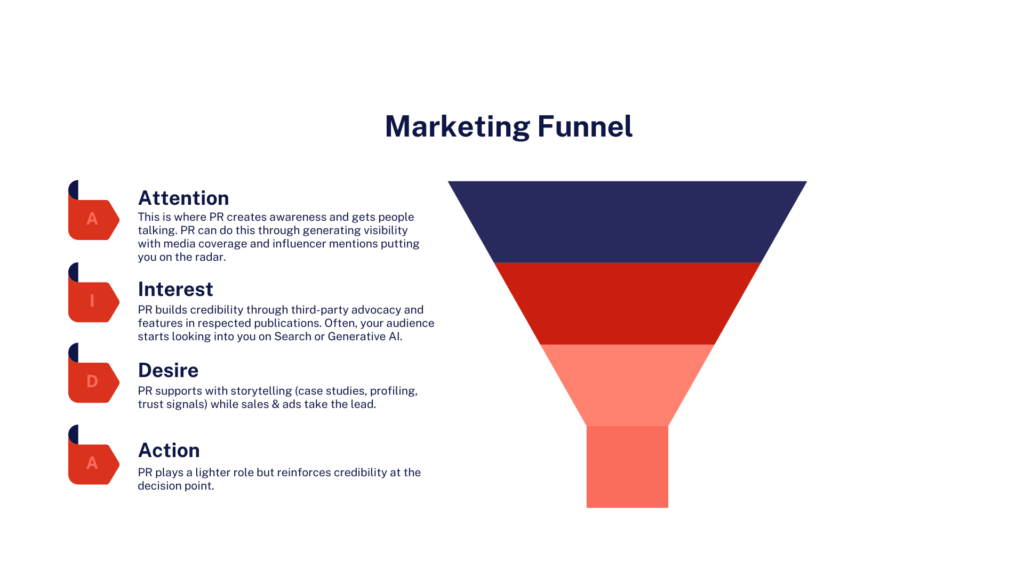
PR is especially powerful at the top and middle of the Marketing funnel to build awareness and spark interest. It gets people talking about you, builds trust, and makes your brand the one people remember when it’s time to buy. Advertising might get someone’s attention, but PR gives them confidence in your brand.
Why PR (Third-Party Advocacy) Matters
Anyone can claim they’re the best, but let’s be honest, it only really counts when someone else says it. When a journalist, influencer, or customer speaks about you positively, it carries real weight and builds trust. That’s the power of PR: it gives you the stamp of credibility no advert can buy.
Types of PR Tactics You Might Use
PR isn’t just about press releases. Some of the most effective tactics include:
- Influencer PR – partnering with voices your audience already trusts.
- Thought Leadership – sharing smart insights that position you as an expert in your field. This builds long-term trust, authority and can even shape industry conversations.
- Newsjacking – jumping on trending stories with a relevant, timely angle. Puts your brand into the spotlight and is perfect for boosting visibility in the moment.
- Profiling – telling your founder’s or team’s story in a compelling way. This humanises your brand and makes you relatable and memorable. Overall, it builds an emotional connection while strengthening trust and reputation.
- Product Placement – place products in guides or listicles to capture consumers in their shopping/research mode
- Case Studies & Customer Stories – Turning happy clients into advocates, and they provide real-world proof points that reassure prospects.
Bringing It All Together
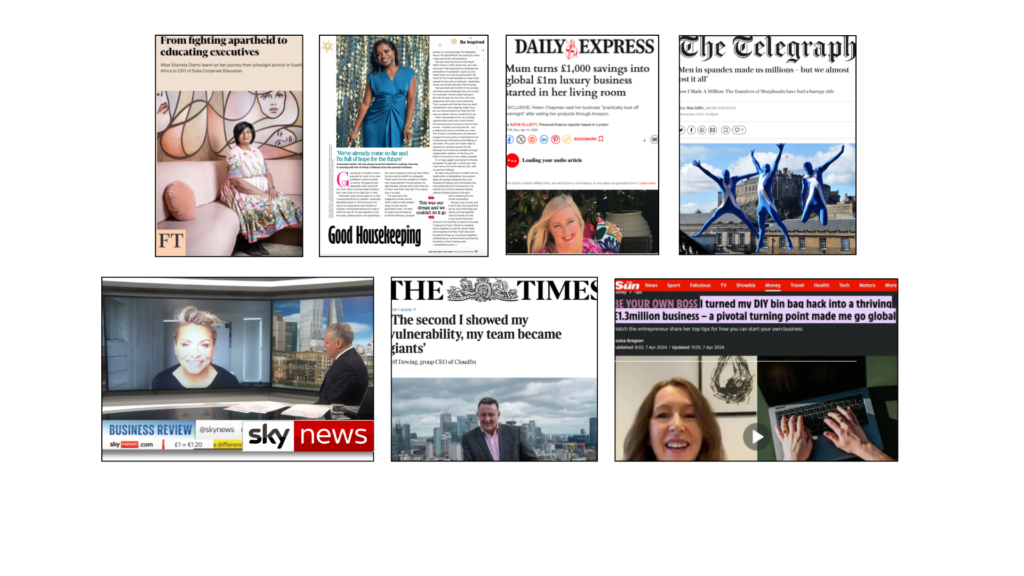
With so many ways to market your business and brand, the trick is to make sure your PR, marketing, social, and content teams aren’t working in silos. PR isn’t a standalone add-on; it’s a crucial part of the mix. When done right, it builds trust, amplifies your campaigns and keeps your brand top of mind for all the right reasons.
So next time someone asks, “What is PR?”, you’ll know it’s not just about press releases. It’s so much more: shaping stories, building credibility and creating lasting impact.
